Queer Places:
Villa Rossa, Piazza Fra' Girolamo Savonarola, 15, 50132 Firenze FI
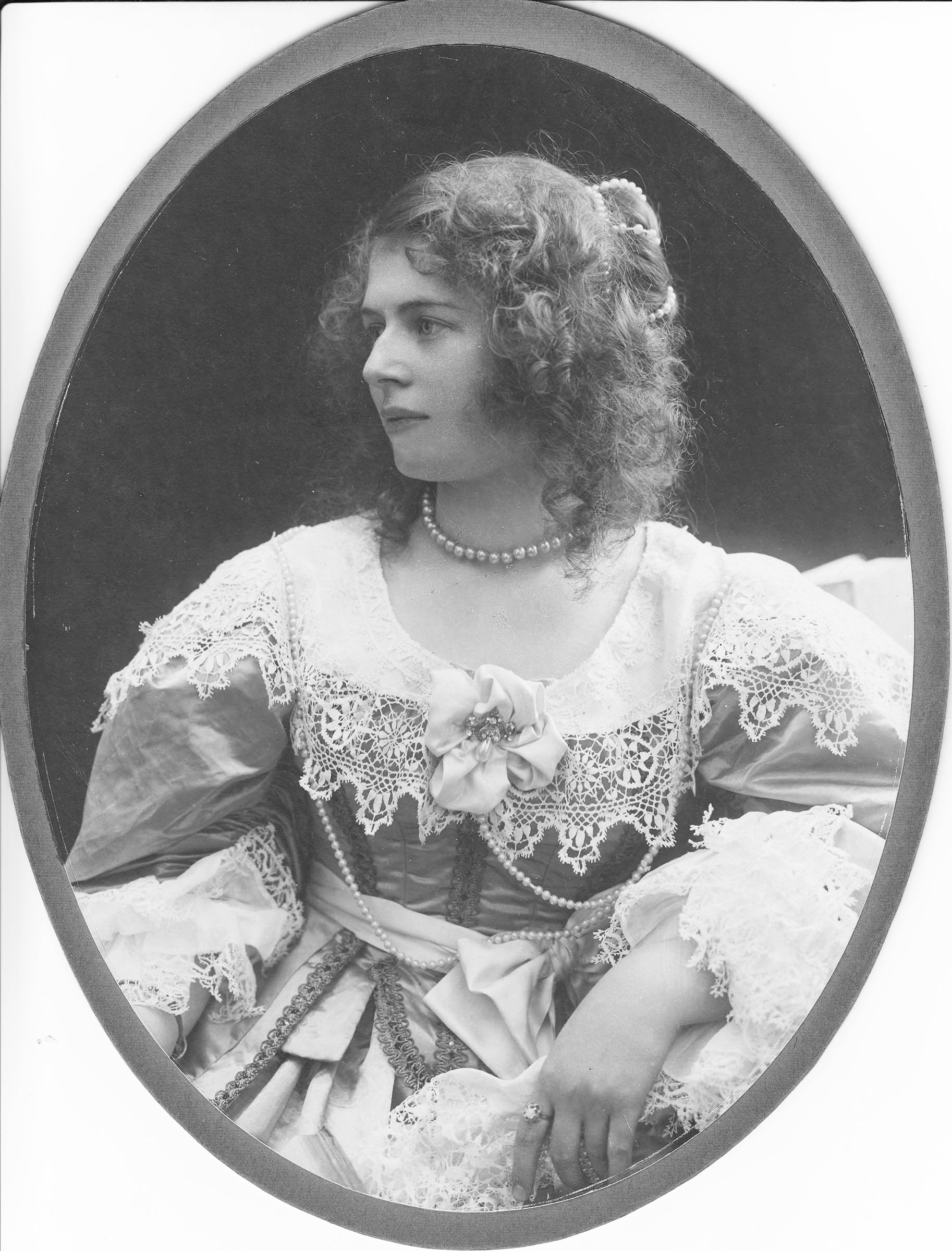 Bona Gigliucci (February 26, 1885 – February 3, 1982) was born in Florence on February 26, 1885, into a cosmopolitan family originally from Fermo, and
passed away in the same city on February 3, 1982, shortly before her 97th birthday. She was the third child of Count Mario Gigliucci and Edith Margaret
Mozley. Her maternal grandmother was the renowned Anglo-Italian soprano Clara Novello, through whom the family maintained a strong tradition of
cultivating a passion for music.
After initial residences in Florence, the Gigliucci family moved to Villa Romana in via Senese, and later, in 1892, permanently relocated to the Villa
Rossa in Piazza Savonarola, which was designed and built by her father Mario. Bona lived in this villa for virtually her entire life. Never marrying, she
dedicated herself to caring for her aging father until his death in 1937, and she maintained her home on the top floor of the villa through subsequent
decades. When Syracuse University established its study abroad program in Florence in 1959, the Gigliucci siblings agreed to rent parts of the Villa
Rossa under the ongoing condition that Bona could continue living in her top-floor residence. For 23 years, she shared the villa in an amicable
cohabitation with the university and students, who affectionately referred to her as "La Contessa" until her passing in 1982. She was subsequently laid
to rest, and Syracuse University became the sole owner of the property.
Professionally, Bona was an illustrator, children's literature author, and volunteer nurse with the Italian Red Cross. Following the outbreak of the
First World War, she and her sister Nerina joined the Red Cross following their family's patriotic
tradition, and Bona continued her active involvement in charitable works and the Red Cross throughout her life. As an artist, she studied under painter
Eugenio Cecconi, creating portraits and landscapes, and contributing illustrations to various notable children's publications and song collections,
including Canzoni popolari per i bambini (1912), Paolo Lombroso's Storie vere di zia Mariù (1913), Girotondi e filastrocche, come si cantano in varie
parti d'Italia (1930), and Anna Sven's Il giardino bianco (1979).
In 1979, Bona made a significant cultural donation by dividing and gifting the family's book collection and her father Mario's papers to the Comune di
Firenze (housed in the Biblioteca Comunale Centrale) and the Gabinetto Vieusseux, with additional materials preserved at the Conservatory of Music G.
Rossini in Fermo.
Bona Gigliucci is connected to the prominent Anglo-American writer, intellectual, and central figure of the Florentine lesbian literary circle,
Vernon Lee (Violet Paget). Vernon Lee maintained deep social and intellectual circles among expatriates and
Italian families in Florence, connecting writers, artists, and cultural figures like the Gigliuccis within the vibrant artistic community of the city.
References:
- SIUSA (Sistema Informativo Unificato per le Soprintendenze Archivistiche): Archival description and records for Gigliucci Mario e Bona.
- Biblioteca Comunale Centrale di Firenze: Documentation regarding the Fondo Gigliucci, detailing the 1979 donation of family books and papers.
- Gabinetto Scientifico Letterario G.P. Vieusseux: Records concerning the family's historical materials and manuscripts housed within the Archivio contemporaneo A. Bonsanti.
- Biblioteca del Conservatorio di Musica G. Rossini di Fermo: Repository holding manuscripts, nineteenth-century prints, and a collection of gramophone records associated with Bona Gigliucci.
- Syracuse University (Syracuse Abroad - The Villa Rossa Archive): Biographical records, historical timelines, and archival details regarding Bona Gigliucci, her residence at the Villa Rossa, and her family.
Support this project
This website is a passion project researched, developed, and funded entirely by me. If you find the content valuable and would like to help support the ongoing research and hosting costs, any contribution is deeply appreciated.
Thank you for keeping this independent resource alive!
My books on Amazon: Elisa Rolle's books
BACK TO HOME PAGE